Delivery work in Australia splits into two different jobs: an employed driver covered by the Road Transport and Distribution Award, and a platform contractor with an ABN. From the first full pay period on or after 1 July 2026 the award pays a grade 2 driver $27.51 an hour, and since 17 August 2026 gig delivery workers have a legal earnings floor of $31.30 to $32.00 an hour of engaged time.
This guide covers both routes: the real rates, the new gig rules, what the ATO expects, and what each platform actually requires.
Employee or Contractor: The Decision That Sets Everything Else
- Employed driver. Covered by the Road Transport and Distribution Award 2020, with minimum hourly rates, penalty rates, casual loading and leave entitlements.
- Platform contractor. You work through an app with your own ABN, set your own hours, pay your own tax, and are now covered by a minimum standards order rather than the award.
Award Pay: The Rates Most Guides Have Wrong
Award rates rise every July. These are the current rates from the Fair Work pay guide, effective from the first full pay period on or after 1 July 2026:
| Classification | Weekly | Hourly | Casual hourly |
|---|---|---|---|
| Grade 1 (foot or bicycle courier) | $1,021.00 | $26.87 | $33.59 |
| Grade 2 (rigid vehicle up to 4.5 t) | $1,045.50 | $27.51 | $34.39 |
| Grade 3 (over 4.5 t up to 13.9 t) | $1,057.60 | $27.83 | $34.79 |
| Grade 4 (three-axle rigid) | $1,076.20 | $28.32 | $35.40 |
- Casual loading is 25%, which is where the casual column comes from.
- Saturday pays 150% and Sunday 200% of the ordinary hourly rate — for a grade 2 driver, $41.27 and $55.02.
- A full-time grade 2 driver's weekly rate of $1,045.50 works out at about $54,366 a year, not the $49,953 quoted in older guides.
- The national minimum wage from 1 July 2026 is $26.44 an hour, or $1,004.90 a week.
One classification detail worth knowing: a foot or bicycle courier is grade 1, not grade 2. Grade 2 starts with a rigid vehicle, including a motorcycle, up to 4.5 tonnes.

Gig Delivery Now Has a Legal Pay Floor
This is the biggest change in the sector, and most guides have not caught up. Under the Closing Loopholes laws that commenced on 26 August 2024, the Fair Work Commission gained power to set minimum standards for "employee-like" workers on digital labour platforms.
On 11 August 2026 the Commission made the Interim On-Demand Delivery Employee-like Worker Minimum Standards Order, in force from 17 August 2026. It is the first such order ever made, and it covers workers engaged through an app who mainly collect and deliver food, drinks or groceries for immediate delivery, in vehicles up to one tonne capacity.
| Vehicle | 17 Aug – 31 Dec 2026 | From 1 Jan 2027 |
|---|---|---|
| No vehicle, pedal bicycle, e-bike or e-scooter | $31.30 | $31.80 |
| Combustion motorcycle or scooter | $31.50 | $32.00 |
| Other motor vehicles up to 1 tonne | $32.00 | — |
The floor applies to engaged time, measured over an earnings period the platform sets of up to 21 days, with any shortfall topped up in the next period or within seven days after it. The order also covers vehicle standards, records, insurance, consultation, unpaid time away and information that must come with each engagement request.
Alongside it, the same laws give employee-like workers access to unfair deactivation claims, with a 21-day filing limit.
ABN, GST and Tax for Platform Work
- ABN. Every major platform requires one. Apply through the Australian Business Register; a successful online application usually returns the number immediately.
- GST. Food delivery follows the ordinary rule: register once your turnover reaches $75,000. The rule that forces registration from the first dollar applies to passenger ride-sourcing, which the ATO treats as taxi travel — not to delivering meals or parcels.
- Car expenses. The cents per kilometre rate is 91 cents for 2026-27, capped at 5,000 work-related kilometres per car, and it already covers fuel, servicing, registration, insurance and depreciation. The alternative is the logbook method, claiming the work-related percentage of actual costs with no cap.
- Records. You pay tax on profit, not on gross earnings, so keep the kilometres, the phone bills and the equipment receipts from day one.
What the Platforms Actually Require
| Platform | What its own page requires |
|---|---|
| Uber Eats | ABN, proof of ID, a background check and a work-rights check. A full licence for motorbikes, and for cars in NSW, ACT and NT; P2 accepted for cars in VIC, QLD, WA, SA and TAS. Bicycle riders must pass a safety test at 100%. Recreational e-scooters are not accepted. |
| DoorDash | 18 or older, any car, scooter or bicycle, an ABN, consent to a free background check and the right to work in Australia. |
| Amazon Flex | 20 or older, a full unrestricted licence (provisional and international licences are not accepted), an eligible four-door car or van, CTP plus third-party property insurance, a compatible phone, an Australian bank account and an ABN in your own name. |
Amazon also runs Delivery Service Partners, which is a different thing entirely: a DSP is a small business running 20 to 40 vans that employs its drivers. If you want employee conditions in parcel delivery, a DSP is the employer to apply to, not Amazon itself.
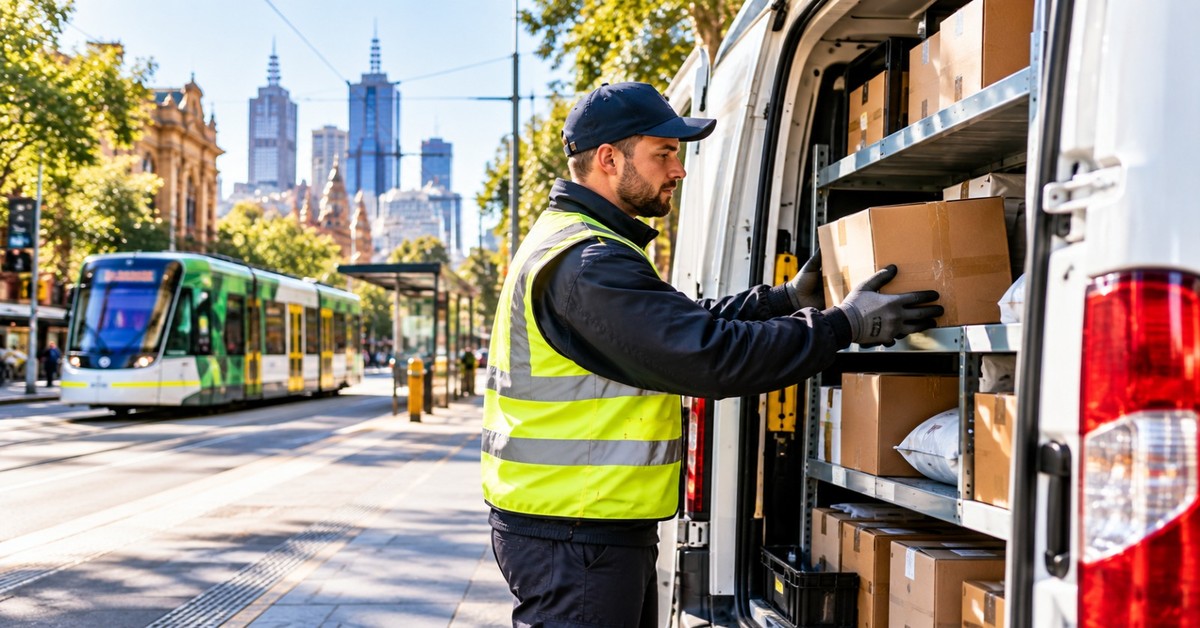
Licences and Checks
- Licence. Each state and territory issues its own. A NSW class C car licence covers vehicles up to 4.5 tonnes; motorcycles and scooters need a separate rider licence, and bicycle delivery needs none.
- Police check. The official federal route is an AFP National Police Check, currently $56, or $113 where fingerprints are required. Digital certificates usually arrive within days, and the certificate is tied to the purpose you gave.
What the 2019 Uber Finding Actually Said
The Fair Work Ombudsman finished its Uber investigation on 7 June 2019 and concluded that "the relationship between Uber Australia and the drivers is not an employment relationship". Two things guides get wrong: it concerned Uber drivers generally, not Uber Eats riders, and the Ombudsman said the investigation "related solely to Uber Australia and was not an investigation of the gig economy more generally". The new minimum standards order, not that finding, is what governs gig delivery pay today.
How to Get Started
- Decide employee or contractor first — award conditions and leave, or flexible hours and your own costs.
- Check the award rate against any employed offer, using the grade that matches the vehicle.
- Get your ABN before signing up to a platform.
- Match the licence to the vehicle, and check the platform's state-by-state licence rules.
- Order a police check if you are targeting employed courier or parcel work.
- Track kilometres and expenses from the first shift, whichever route you take.
Frequently Asked Questions
What is the minimum pay for a delivery driver in Australia?
Under the Road Transport and Distribution Award from 1 July 2026, a grade 2 driver gets $27.51 an hour, or $34.39 as a casual. Saturday pays 150% and Sunday 200%.
Do gig delivery riders have a minimum rate now?
Yes. The interim minimum standards order in force since 17 August 2026 sets a floor of $31.30 an hour of engaged time for bicycles and e-bikes, $31.50 for motorcycles and $32.00 for other vehicles up to one tonne.
Do I need an ABN to deliver?
For platform work, yes: Uber Eats, DoorDash and Amazon Flex all require one. Employed courier roles do not, because you are an employee.
Do food delivery riders have to register for GST?
Only once turnover reaches $75,000. The register-from-the-first-dollar rule applies to passenger ride-sourcing, not to food or parcel delivery.
What can I claim at tax time?
Work-related car costs, either at 91 cents a kilometre up to 5,000 kilometres for 2026-27 or by logbook, plus phone, equipment and other work expenses. You are taxed on profit.
What licence do I need?
A car licence for van and car work, a rider licence for motorcycles and scooters, and no licence for bicycle delivery. Amazon Flex requires a full unrestricted licence.
How much is a police check?
An AFP national police check costs $56, or $113 if fingerprints are needed.
Is Amazon Flex the same as being an Amazon driver?
No. Flex is contractor work with your own vehicle and ABN. Amazon's Delivery Service Partners are separate businesses that employ their drivers.
People Also Search For
Delivery driver pay rate Australia
$27.51 an hour for award grade 2 from July 2026.
Uber Eats requirements Australia
ABN, ID, background and work-rights checks, and a licence that matches your state.
Amazon Flex Australia
20 or older, full unrestricted licence, eligible vehicle and an ABN in your own name.
Gig worker minimum standards
The first order took effect on 17 August 2026 with an engaged-time floor.
ABN for delivery driver
Free to apply through the Australian Business Register and required by every platform.
GST threshold Australia
$75,000 for delivery work; ride-sourcing must register from the first dollar.
Cents per kilometre 2026-27
91 cents, capped at 5,000 work-related kilometres per car.
Casual loading Australia
25% on the ordinary hourly rate under this award.
More Job Guides
Comparing delivery and driving routes? These cover them:
- Taxi Driver Jobs in Australia — passenger work, its licensing and what it pays.
- How to Get a Warehouse Driver Job in UK — the British licence ladder and ONS pay.
- How to Get a Fleet Driver Job in Canada — provincial licences, training hours and Job Bank wages.
- Delivery Driver Jobs in USA — the American van and app market.
- Visa Sponsorship Jobs in Australia — which Australian jobs can actually be sponsored.
- No Experience Jobs in Australia — other entry-level routes and their award rates.
This article is for general informational purposes, using the Fair Work Ombudsman pay guide for MA000038, Fair Work Commission decisions and orders, ATO guidance, AFP fees and the platforms' own requirement pages. Award rates change every July and platform rules change often. Always check the current pay guide and platform terms before you start.