To drive for a Canadian fleet you need the right provincial licence class — Class 1 or Ontario's AZ for tractor-trailers, Class 3 or DZ for straight trucks — an air brake endorsement, and, in most provinces, mandatory entry-level training before the road test. Job Bank puts transport truck drivers at a median of $26.42 an hour, with Alberta and British Columbia paying the most.
This guide covers the licence classes province by province, the training hours each one requires, what CVOR really is, and what the work pays on official figures.
Licence Classes: The Naming Changes at the Border of Every Province
- Ontario uses letters. Class A covers a vehicle towing over 4,600 kg, so tractor-trailers; Class D covers a truck over 11,000 kg towing no more than 4,600 kg. The Z added to each — AZ, DZ — is the air brake endorsement.
- Most other provinces use numbers. Class 1 is the tractor-trailer equivalent of AZ; Class 3 covers trucks with three or more axles, roughly Ontario's D.
Job adverts print both ("Class 1/AZ") because fleets hire across provinces. If you are moving province, confirm how your licence transfers before you accept — Ontario, for example, requires its full training course from holders of a commercial licence issued in another country, and from holders of an out-of-province Class 1 held for less than 12 months.
Mandatory Entry-Level Training, Province by Province
| Province | Required training before the Class 1 or A road test |
|---|---|
| Ontario | At least 103.5 hours of mandatory entry-level training, valid for life |
| British Columbia | 140 hours, including air brake training and six hours of flexible practical training |
| Saskatchewan | 121.5 hours: 47 classroom or online, 17.5 in the yard, 57 behind the wheel |
| Manitoba | 121.5 hours, mandatory since 2019 |
| Alberta | MELT replaced on 1 April 2025 by the Class 1 Learning Pathway: a 40-hour entry program, then Core Learning of 67 hours from 1 September 2026, plus 8 hours of air brake training if you have no Q endorsement |
Alberta's pathway has a twist worth planning around: passing it gives a provincially restricted Class 1 valid in Alberta only, and a further Competence Building Program removes the restriction for interprovincial work.
Air Brakes: Three Different Mechanisms
- Ontario: a separate Z endorsement, taken through an air brake course or the DriveTest assessments, needed for any vehicle with air or air-over-hydraulic brakes.
- Alberta: the Q endorsement, and Alberta requires you to complete it before the Class 1 licence.
- British Columbia: an air brake endorsement is required to drive an air-braked vehicle, but Class 1 applicants do not take a separate course because it is built into the training.
CVOR Is Not Your Record — Here Is What Is
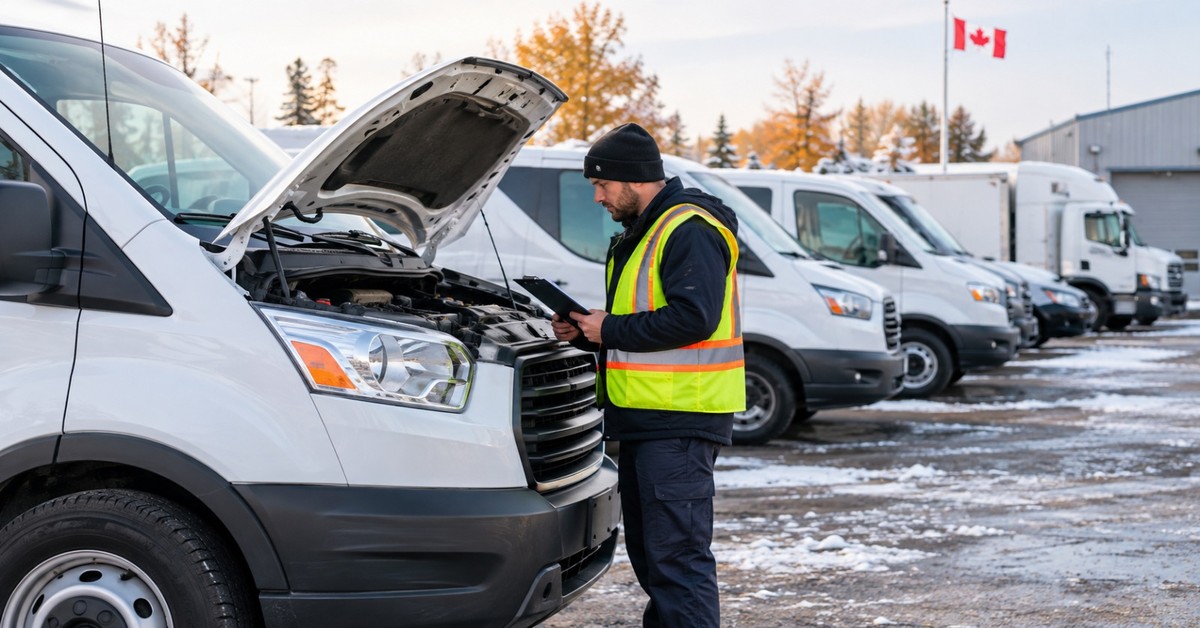
This is the detail most guides get wrong. In Ontario, a Commercial Vehicle Operator's Registration certificate belongs to the operator — the carrier, or an owner-operator running as a business. Anyone operating a commercial vehicle over 4,500 kg registered weight in Ontario must hold one, and a copy travels in the vehicle. As an employee driver you do not "have a CVOR".
What employers actually pull about you:
- your driver's record (abstract) — the three-year version is the one commonly used for employment, at $12 uncertified or $18 certified;
- a CVOR driver abstract — a five-year record of collisions, safety-related convictions and inspections while you were driving commercially in Ontario, at $5 uncertified or $10 certified.
Order both before you apply. Knowing what a recruiter sees is worth more than hoping.
Ontario's Manual Transmission Rule
Since 1 July 2022, an Ontario Class A road test must be taken in a vehicle with a manual transmission of at least eight forward gears with a high-low range. Pass in anything else and your licence carries a restriction barring you from manual Class A vehicles in Ontario. That is why adverts still ask for 13 or 18-speed experience even as fleets buy automated transmissions.
What Fleet Drivers Actually Earn
Job Bank's wages for NOC 73300, transport truck drivers, updated 19 November 2025:
| Where | Low | Median | High |
|---|---|---|---|
| Canada | $19.45 | $26.42 | $37.00 |
| Alberta | $21.00 | $30.00 | $42.31 |
| British Columbia | $22.00 | $30.77 | $40.38 |
| Saskatchewan | $18.50 | $27.00 | $37.00 |
| Ontario | $19.23 | $26.00 | $35.00 |
| Quebec | $19.45 | $25.20 | $34.50 |
Two things follow. Alberta and British Columbia pay noticeably more than Ontario, and the "$21 to $23 an hour" starting figure quoted on job boards sits below Ontario's own median of $26.00. Within Ontario, Job Bank's regional medians run from $25.00 in Kingston-Pembroke to $28.00 in Kitchener-Waterloo-Barrie and Stratford-Bruce, with Toronto at $25.10.
No official Canadian source publishes pay premiums by trailer type, so treat "flatbed pays more" claims as recruiter talk until a specific posting proves it.
Is There Really a Driver Shortage?
Job Bank rates NOC 73300 as a moderate risk of labour shortage over 2024 to 2033, which is more measured than the language most adverts use. The structural reason is visible in the same data: 319,400 people were employed in 2023, 48% of them aged 50 or over, with a median retirement age of 67.
Three-year prospects are rated Moderate in Ontario, Alberta and British Columbia, Good in Saskatchewan, and Limited in Quebec and Manitoba.

Local or Long-Haul?
- Local fleet work: home daily, hourly pay, more loading and city driving. Job Bank's provincial medians above are the honest benchmark to compare an offer against.
- Long-haul: multi-day runs, more miles, and cross-border work if the carrier runs into the United States.
For cross-border work, the FAST programme run by CBSA and US Customs speeds up clearance for approved low-risk shipments and enrolled drivers. It is an expedited-processing programme, not a legal requirement to cross the border — check what your carrier's lanes actually need.
What Job Bank Says You Need
- completion of secondary school is usually required;
- on-the-job training is provided;
- an accredited driver training course of up to three months may be required;
- Class 1 or A for long combination vehicles, Class 3 or D for straight trucks;
- the air brake (Z) endorsement for air-braked vehicles;
- TDG certification for dangerous goods.
Applying From Outside Canada
Transport truck driver sits in TEER category 3 of the national occupational classification. One correction worth knowing before you plan a move: the federal Express Entry transport category does not include truck drivers — its listed occupations are aircraft mechanics and inspectors, pilots and flight engineers, avionics technicians, and automotive and truck and bus mechanics. Check the current category-based selection page before acting on any advert that says otherwise.
How to Get Hired
- Confirm the class your target fleet needs, in your province's naming.
- Budget the training hours your province requires, and the air brake step if it is separate.
- Pull your driver's record and CVOR driver abstract before applying.
- Take the road test in a manual in Ontario unless you are content with the restriction.
- Compare the offer with Job Bank's provincial median, not with a job board's "starting rate".
- Ask about the collective agreement if the posting mentions a probationary rate.
Frequently Asked Questions
What is the difference between AZ and DZ?
AZ is Ontario's Class A with the air brake endorsement, for tractor-trailers. DZ is Class D with air brakes, for straight trucks over 11,000 kg. Elsewhere they are Class 1 and Class 3.
Do fleet drivers need a CVOR?
No. The CVOR certificate belongs to the carrier or operator. Employers check your driver's record, and may order a CVOR driver abstract that shows your commercial driving history in Ontario.
How much do truck drivers earn in Canada?
Job Bank's national median is $26.42 an hour, with a low of $19.45 and a high of $37.00. Alberta ($30.00) and British Columbia ($30.77) have the highest provincial medians.
How many training hours do I need?
Ontario requires at least 103.5 hours, British Columbia 140, and Saskatchewan and Manitoba 121.5. Alberta replaced MELT with the Class 1 Learning Pathway in 2025.
Do I need a manual transmission for the road test?
In Ontario, yes, for an unrestricted Class A: the test vehicle must have a manual transmission with at least eight forward gears and a high-low range.
Is there a truck driver shortage in Canada?
Job Bank rates it a moderate risk of labour shortage to 2033. Almost half of drivers are 50 or older, so replacement demand is the main driver.
Do I need a FAST card to cross into the United States?
No. FAST is an expedited clearance programme for approved low-risk shipments and enrolled drivers, not a requirement to cross.
Can truck drivers immigrate through Express Entry?
Not through the transport category, which covers aviation and mechanic occupations. Check the current category-based selection rules before relying on any other claim.
People Also Search For
AZ driver jobs Ontario
Ontario's median for transport truck drivers is $26.00 an hour.
Class 1 licence Alberta
Now the Class 1 Learning Pathway, with a 40-hour entry program and 67 hours of core learning.
MELT training hours
103.5 in Ontario, 140 in BC, 121.5 in Saskatchewan and Manitoba.
Air brake endorsement
Z in Ontario, Q in Alberta before Class 1, built into BC's Class 1 course.
CVOR abstract cost
$5 uncertified, $10 certified; a driver's record is $12 or $18.
Truck driver wages Alberta
$30.00 an hour at the median, the highest of the big provinces.
Long haul vs local driving
Local is hourly and home daily; long-haul runs multi-day and sometimes cross-border.
NOC 73300
The classification covering transport truck drivers, TEER category 3.
More Job Guides
Comparing driving routes and Canadian work? These cover them:
- Bus Driver Jobs in Canada — passenger driving, its licence classes and Job Bank pay.
- How to Become a Long-Haul Truck Driver in USA — the American route, its permit rules and pay.
- How to Get a Transport Job in Germany — the European route, where drivers can be sponsored.
- How to Get a Warehouse Driver Job in UK — the British licence ladder and what it pays.
- Jobs in Canada for Foreign Workers — which sectors hire and the routes in.
- Visa Sponsorship Jobs in Canada — the LMIA and the routes to permanent residence.
- How to Get a Delivery Job in Australia — award pay, the new gig minimum standards order, ABN and GST rules.
- How to Apply for Air Canada Airport Jobs — an airline that publishes its ramp pay, and the clearance that gates it.
This article is for general informational purposes, using Job Bank data for NOC 73300 and official provincial licensing information from Ontario, Alberta, British Columbia and Saskatchewan, plus CBSA and canada.ca. Rules, fees and wages change. Always check your province's licensing authority and the current posting before applying.